
AP English Literature
Online for the 2026-2027 School Year
Teacher: Maya Inspektor
Email: minspektor@gmail.com
Email: minspektor@gmail.com
You are not currently logged in.
You must log-in/sign-up before you can pay tuition for a course.
Log-in/Sign-up to RegisterNote: As of March 26th 2026, this class is full. You are still welcome to apply, but any new applicants will automatically be placed on the waiting list, and I will only evaluate new applications if space opens up.
Note: Please do NOT submit payment for the class until you have received an acceptance letter from Mrs. Inspektor in response to your application. The application form for the 2026-27 course will open on February 1st, 2026, and I will begin to respond to applications after February 15th, 2026. The 2026-27 application can be found at the following Google Form: https://forms.gle/3pJcvkoKsat59YqLA
Course description: This highly interactive college-level course is designed to prepare students for the AP English Literature and Composition exam in May. It will push students to read imaginative literature (novels, poetry, and plays) closely and deeply. We will explore literary techniques and seek to recognize the way that historical and social context impacts writing. We will actively engage with literature on every level and tease apart its complexity, considering (for example) diction, style, theme, imagery, symbolism, and tone.
I have selected books that I feel can be appreciated even more upon rereading and that can be used fruitfully in literary argument questions on the AP® exam. These range from 16th century to 20th century works and involve some mature situations and themes, although I have tried to avoid works with explicit content or vulgarity. We will also study a range of poetry and short stories, using Perrine's Literature as well as online sources. In addition, students will form independent book clubs to discuss high-quality literature they select in informal discussion groups.
Students should anticipate reading 50-80 pages each week and writing one essay (or the equivalent) weekly, as well as numerous shorter responses. Students will also participate in interactive discussions of their readings throughout the week, composing responses to discussion questions and commenting on their classmates' responses, and they will generally write a short reply to a "Morning Message" each day. Finally, they will engage in targeted test preparation for the AP® English Literature and Composition exam. I also want students to come to understand what college literature study might involve, so we'll study "real" literary criticism about the works that we read, entering this way into the broader literary conversation occurring all over the world.
The writing assignments students will complete during this course vary. They will include informal journal entries, discussion question responses, formal analytic essays, poetry, and even parody. I will also emphasize peer review and the writing process, as students bring their essays through multiple drafts and hone their ability to write organized, creative analysis. During the fall semester, students will write original short stories inspired by stories they studied, and during the spring semester, they will write an entry into the Jane Austen Society of North America Essay Contest (read my students' 2015 winning entries here, the 2017 winning entries here, the 2018 winning entries here, the 2019 winning entries here (first and third place), the 2020 winning entries here (second and third place), the 2021 winning entries here (second place) and the 2022 winning entries here (first and third place), the 2023 winning entries here (first and second place), and the 2025 winning entry here) and compose an extended novel comparison paper drawing upon literary criticism and expressing their own analysis. Of course, a major focus of our study involves writing exam-style essays, and I help students develop their own mature, complex, and non-formulaic (but organized) essay style.
While our primary focus will be on the analysis of literature, this course is well suited to students who also love to write creatively. Throughout the year, I will draw connections to creative writing and help students come to understand the process of professional writers, and I'll even ask students to write an original short story and some original works of poetry.
Ultimately, I hope students leave this course with a zest for uncovering the many layers of meaning in the fiction they read and an appreciation for the music and meaning of poetry. They will gain not only an arsenal of literary terms, but also a sense for the patterns that underlie the books they read. Literature throughout the ages is an interwoven web, and I look forward to exploring this web with my students.
My teaching philosophy is rooted in the idea that classwork should have a purpose, and I am happy to accommodate students whose needs are better served by alterations to the class workload.
I also hope my students do well on the AP® exam, and in the past this has certainly been the case-- in most of my past classes, fully 90% of students have received grades of 4 or 5 on the AP exam.
Course structure: This course is primarily asynchronous, which means that work can be completed on students' own schedules with no required live meetings. Primary instruction will come in the form of Morning Messages (usually at least 2000 words) that students will read each weekday. Students will interact asynchronously by writing extensive responses to each others' discussion questions and essays as well as through responses to the daily Morning Messages.
While this course is designed to function through written interaction, it does involve a few flexible live components.
1) Every two weeks, I will host a one-hour Zoom session to complement class instruction. These meetings will alternate between 11 AM US Eastern Time on Tuesdays and a time (or times) to be determined, most likely on Wednesday. (I will choose the additional time by polling the class about availability, and I will try to make sure that any student who can't attend the Tuesday 11 AM meetings can attend at least one of the other time slots.) I will share a video recording of every meeting for students who could not attend.
2) I encourage students to hold their small-group "Book Club" meetings via video chat, though students will have written options for these discussions as well. In-person spoken discussion is a valuable skill to practice!
I am happy to accommodate students who need to work ahead, students who live in international time zones, or students who face particularly busy times during their school year. However, I do not recommend the class to students with extensive travel plans or time constraints during the school year.
Who should apply: Students with a love for literature who would like to invest time and energy into pondering the deeper meaning and construction of the texts they read. Students should come in with the ability to write with few grammatical errors, but they do not need to have had extensive prior formal literature study or extensive experience writing formal essays. They should, however, come in with extensive experience as avid readers!
I do not recommend this course for students who are seeking remedial instruction in reading or writing. While I do provide some grammatical instruction, this course is not appropriate for students who struggle with extensive grammatical errors or who have great difficulty with the writing skills section of the SAT. (I recommend an SAT score in both the English and writing sections of the SAT of at least 600 as a pre-requisite. You do not need to have taken the SATs to apply, however.) This is a challenging, high-level course designed to take students who have mastered high-school-level work to an even more advanced level.
Students who are self-disciplined and internally motivated tend to excel in this class, while students who have trouble managing their time and the abstract demands of an online class would better served by a more conventional class setting.
I strongly discourage students from taking this class concurrently with another formal English class. This class involves a great deal of reading and writing, and I find that the quality of student work (and the amount that they learn from EITHER class) decreases if students are overloaded.
This course is open to 11th and 12th graders as well as 10th graders who can present excellent credentials, such as previous AP exam or SAT scores. (I recommend English SAT scores of at least 600 as a prerequisite for the class.) I will only consider AP English Literature applications from 9th grade students after consultation by e-mail to determine whether this course is a good fit.
Required Texts:
- Summer Reading: How to Read Literature Like a Professor: A Lively and Entertaining Guide to Reading Between the Lines, Thomas C. Foster. ISBN: 006000942X
- Perrine's Literature: Structure, Sound and Sense. Essentially any edition will be fine, but all of the page numbers I supply will be from the 9th edition. I also referred to the 4th and 6th editions in crafting my syllabus. Students using other editions may need to rely on web texts (which I am usually able to provide) for more of the short readings. Used editions are usually available quite cheaply! Note: we will start the start the year with an intensive, month-long unit of short stories drawn from Perrine's Literature, so please buy this anthology before the course begins.
- Frankenstein, Mary Shelley (any edition; free e-texts are available online)
- The Great Gatsby, F. Scott Fitzgerald (any edition)
- The Glass Menagerie, by Tennessee Williams-- No need to purchase! This play should be included in the drama section of Perrine's Literature.
- A novel by Jane Austen, to be determined-- I'll announce this one after the 2026 JASNA essay contest has been released. Most likely, we will study Northanger Abbey or Persuasion.
- Othello, the Moor of Venice, by William Shakespeare No need to purchase! This play should be included in the drama section of Perrine's Literature.
- Heart of Darkness, by Joseph Conrad (any edition; free e-texts are available online.)
- In addition, students will read five other AP-level works of their choice, discussing these works with small groups of classmates. Parents are welcome to excuse students from this aspect of the course if the students conduct enough high-level reading outside the class.
Registration deadline: There is no registration deadline, but this class usually fills up quickly-- I recommend applying as soon as possible after February 1st.
Tech needs: Full web and printer access (broadband Internet recommended but not required). Students must be able to view Adobe PDF files. It is useful but not essential for students to own a digital camera or scanner.
This course has no set meeting times! Instead, students will interact asynchronously by reading daily instructional messages and writing extensive responses to each others' work. Students will have assignments due every weekday, though, so the course is ideal for students who have fairly consistent availability throughout the week. We are happy to accommodate students who need to work ahead, students who live in international time zones, or students who face particularly busy times during their school year.
Course fee: $925 if payment is received before July 1st; $1000 after July 1st.
Length of course: Monday, August 31, 2026 to Friday, May 7, 2027 (assuming the College Board sticks with the expected exam administration schedule).
Breaks: There will be no assignments due on most U.S. National Holidays. In addition, students will have one week off for fall break, one week off for Thanksgiving break, two weeks off for Christmas / New Years, and one week off for spring break.
Instructor:
Note: Mrs. Inspektor will be the sole instructor for this section of AP English Language, so she will not have a co-teacher responsible for grading a portion of student work as in some past years. This means that the class will be smaller and will fill up sooner, so apply early!
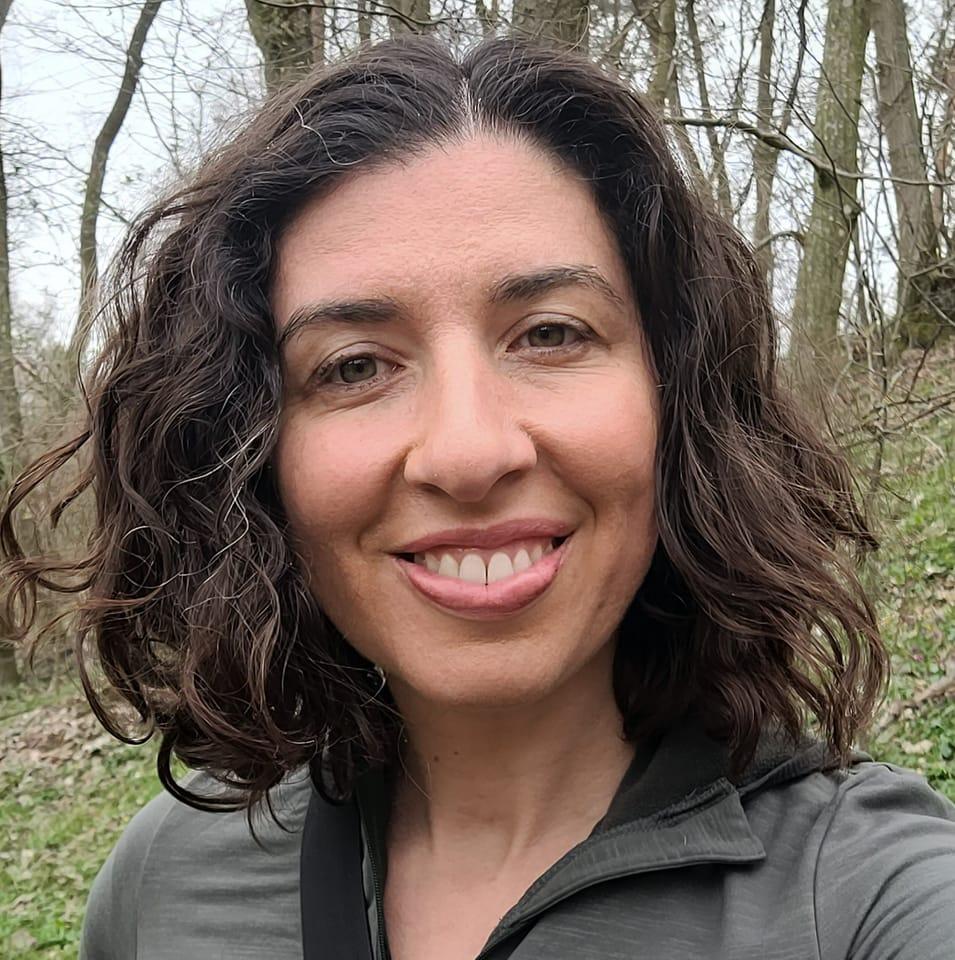
Mrs. Maya Inspektor has been teaching online AP® English for almost two decades and is excited to continue. In the 1990s, she was one of the first student participants in the AP Homeschoolers online courses herself and has fond memories of her own online classes! She graduated summa cum laude from the University of Pittsburgh in 2004, majoring in English Writing and Psychology. She earned a Master of Education degree in Secondary English from Carlow University, researching homeschooling English programs for her master's thesis. She has taught AP English Language and AP English Literature through AP Homeschoolers since 2007. She also enjoys teaching summer classes on writing college application essays (when she's not running marathons, gardening, or renovating her 600-year-old house). An expat since her early 20s, she lived in Israel for 11 years and in the Czech Republic since 2019 with her husband, two children, and rather brainless (but sweet) dog.
All general inquiries should be sent to Mrs. Inspektor: minspektor@gmail.com.